AQR hosts closing ceremony for 50th anniv. of Ayat. Milani’s passing
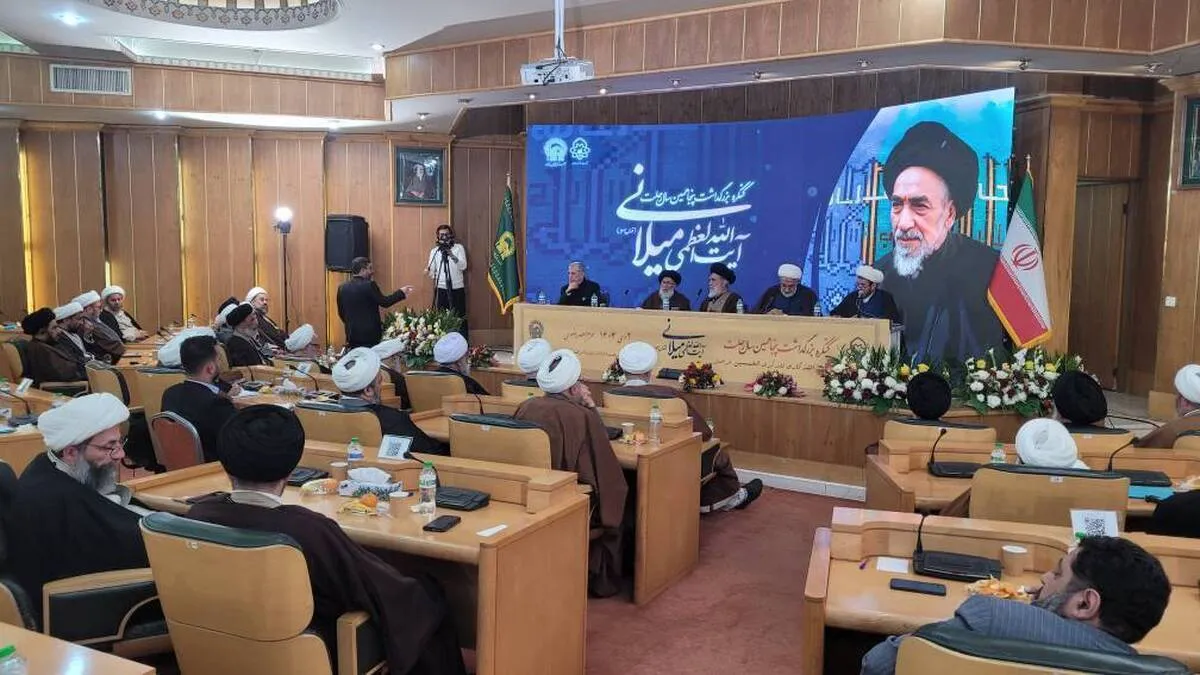
Closing ceremony highlights scholarly legacy and jurisprudential innovations of Ayat. Seyed Mohammad Hadi Hosseini Milani.
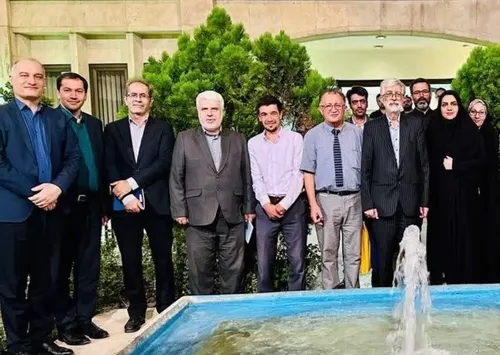
The congress marking the 50th anniversary of the passing of Ayat. Seyed Mohammad Hadi Hosseini Milani concluded on December 25 at Sheikh Tusi Hall of the Islamic Research Foundation of Astan Quds Razavi (AQR).
The ceremony was attended by Ayat. Marvi, the Custodian of Astan Quds Razavi, Hoj. Ali Khayyat, Director of Khorasan seminary, and Dr. Ahad Faramarz Qaramaleki, head of the Islamic Research Foundation.
During the closing session, Hoj. Seyed Ahmad Hosseini Khorasani, member of the Society of Seminary Teachers of Qom, addressed the jurisprudential contributions of Ayat. Milani, particularly his role in affirming the obligation of khums during the era of occultation.
He explained: “Throughout Shia jurisprudence, up to sixteen different opinions had been expressed regarding the fate of the Imam’s share of khums, ranging from burial and safekeeping to the view of Mohaghegh Sabzevari, who argued for its suspension”.
“Ayat. Milani broke this deadlock by introducing the theory of “legal addresses” (khitabat qanuniyyah)”, Hosseini Khorasani noted.
He argued that Quranic injunctions are legislative acts by the Lawgiver, not limited to those physically present at the time of revelation. “Laws apply to all qualified individuals across time, making the obligation of khums permanent and unaffected by the Imam’s absence”.
He compared Milani’s interpretation with that of Imam Khomeini’s, who is widely credited with popularizing the theory. While Imam Khomeini’s son described it as a “heavenly spark,” Hosseini Khorasani emphasized: “Ayat. Milani had simultaneously reached the same profound understanding. Importantly, Milani’s formulation was technically precise and free from certain objections raised against other versions”.
He concluded that Ayat. Milani’s jurisprudential foundation firmly established khums as a lasting divine law, countering views that questioned its validity during the occultation.
Khums is an Islamic financial obligation meaning “one fifth” (20%) of certain types of wealth that must be paid as a religious tax.
Related News
Post comments
- Editor's suggestion
- Latest news
Islamic Revolution’s message transcends national borders
6th Imam Reza International Congress concludes
Intl. scholars explore Razavi justice, resistance against structures of domination
Researchers explore the Ahl al-Bayt’s (AS) distinctive perspectives on justice
Imam Reza Congress, vital platform for strengthening unity of Islamic Ummah
African thinker highlights inseparable link between Razavi teachings, governance model of Martyred Leader
Martyred Leader’s martyrdom resonates across religious boundaries in Latin America
Imam Reza Shrine remains a focal point of convergence for nations, religions
Human rights defined through Imam Reza’s teachings, human dignity: Scholar
Imam Reza’s teachings, “jihad of clarification” ensure invincibility of Resistance: Yemeni researcher
US researcher links Imam Reza’s foresight, Martyred Leader’s legacy to governance
International scholars examine human dignity and rights in light of Imam Reza’s teachings
Scholars examine formation of an independent and self-reliant resistance front against hegemonic powers
6th Imam Reza International Congress explores human rights, Razavi teachings
RUIS professor explains various dimensions of Abdul Azim Hassani’s lifestyle and teachings
Razavi shrine library, a treasury of Persian poets works
Imam Reza’s legal perspectives have gained global prominence
Global power redefined through Razavi teachings and reflected in a leadership model
IRIU, Ministry of Foreign Affairs forge scientific diplomacy ties
Future diplomats tour Imam Reza Shrine
Iraqi students visit Imam Reza Shrine
Campaigns